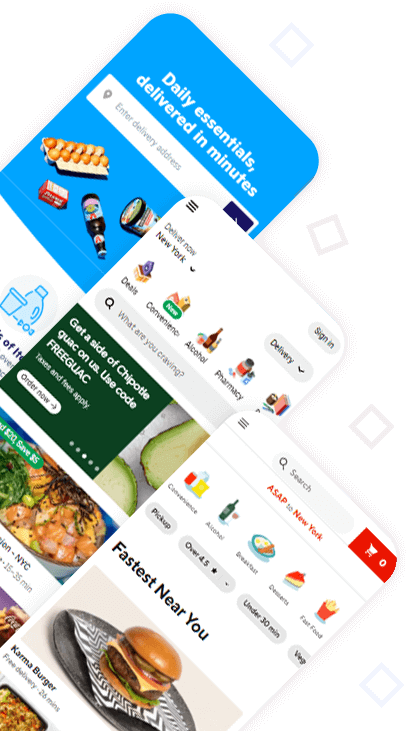
How Cloud-Based Web Scraping Powers Real-Time Business Insights

How Cloud-Based Web Scraping Powers Real Time Business Insights

Introduction   

Prices shift hour to hour; customer attitudes can shift overnight; market trends can change in a fraction of an instant. To make a good decision, companies need visibility on what’s going on now, not yesterday, not last week. 

The exciting challenge lies in the ever-evolving nature of information on websites. While gathering it manually is impractical, embracing innovative scraping strategies can help us navigate the real-time flow effectively. 

Enter cloud-based scraping. By scraping workloads in the cloud, companies can collect, clean, and analyze enormous volumes of online data at scale, and provide those insights to decision makers in real-time. Whether that’s tracking your competitors’ prices, product availability, or analyzing customer sentiment, cloud-based scraping allows businesses to transform the messy universe of the internet into actionable, structured decision-making intelligence. 

What Is Cloud-Based Web Scraping?

Traditional web scraping utilizes software or bots that run on a local machine (PC or server). These software or bots face tremendous limitations with bandwidth or uploading capacity, risk, yes, getting blocked with an IP ban, scaling, and ongoing maintenance on infrastructure. 

Cloud scraping leverages cloud-based web scraping to avoid these issues by creating a load on multiple cloud servers to support reservoirs that can process new website scraping requests. 

There are several salient features: 

  • Being able to scale thousands of scraping bots concurrently Getting failed requests automatically retried by the cloud infrastructure 
  • Rotate IPs when scraping to avoid any complaints or issues with our proxies and scraping methods. 
  • Extracting, cleaning data, and distributing to you near-real time or in small snippets of time. 
  • Feeding data directly into dashboards, CRMs, and BI tools with APIs. 
    Cloud-based web scraping is really about building a constant pipeline of data, not just web scraping. 

Why Real-Time Data Insights Matter? 

Finding data is one thing. Finding it when you need it is another. 

Here are a few examples of why timing is everything:  

  • Retail: If a competitor drops their price at 3 PM, and you respond the next morning, you could have missed the sales opportunity. 
  • Finance: Presently, traders need to have instantaneous second-by-second updates; if you miss even a minute of updates, it can ruin your entire trade. 
  • Travel: All airlines and hotels can change their fares instantaneously; if you scrape a competitor 24 hours prior, that can change altogether, and you will be leaving money on the table. 
  • Supply chains: When scraping, if you miss a key indicator like “low stock” or miss out on spots of late deliveries, you could have avoided expensive mistakes. 

By sourcing cloud-based scraping, it guarantees you aren’t responding to yesterday’s information. The information you obtain and react to is changing in real time. 

What Are The Key Benefits of Cloud-Based Web Scraping?

1. Scalability at Any Level 

Cloud scraping means you can scale up or down to any amount, whether it is 10,000 data points or even 10,000,000—no waiting for more servers to be installed.

2. Speed and Reliability

By spreading the requests over many servers, you would limit bottlenecks. If one server fails, you will get another server to replace it so that your data never stops flowing.

3.Global Data 

Companies can use proxies and geo-targeting to scrape data that targets a specific area (e.g., product pricing in different nations). 

4.Cost Efficient 

Companies only pay for the resources used in the cloud rather than wasting time and money on servers and upkeep. 

5.Seamless Integration 

The data can be delivered in an API directly into the business intelligence platform, dashboards, or a machine learning model, ready for action. 

How Cloud-Based Web Scraping Works? 

The following is a typical cloud scraping sequence: 

  1. Task Scheduling (Deciding what data to collect and how frequently) 
  2. Workload Distribution (Cloud platform distributes the tasks across a large number of servers) 
  3. IP Rotation & Proxy Rotation (Requestily are evenly distributed amongst rotating IPs and proxies to remain undetected) 
  4. Headless Drivers (Technology like Puppeteer or Playwright, which will load the pages just as a human would, even for JavaScript-heavy sites) 
  5. Anti-Bot Handling (The system can pass through CAPTCHA, fingerprinting, and hidden traps) 
  6. Data Structuring (Clean extracted HTML into usable output formats such as CSV, JSON, APIs, etc.) 
  7. Streaming The Results (Results can be streamed into BI tools, CRMs, and analytics platforms) 

While the process improves speed, it also makes cloud-based scraping smarter due to its ability to adapt to current web protections. 

What Are The Real-World Applications of Cloud-Based Web Scraping? 

Cloud scraping is more than a technological shift; it is a process that companies utilize to increase their profitability daily. Many industries find more opportunities than others: 

  1. E-Commerce & Retail 

E-commerce is the fastest-moving industry because a single dip in price or change in inventory becomes real-time for customers once an opportunity presents itself. Cloud scraping gives retail opportunities to: 

  • Monitor competitor promotions and pricing in real-time. 
  • Monitor stocks from many marketplaces such as Amazon, Walmart, and Shopify stores. 


The world’s leading online retailer has live scrapers checking competitors’ prices every 15 minutes. If it recognises that a competitor has lowered their price on a product, their product is matched automatically, thus remaining competitive with no human intervention. 

2. Financial Services 

Concerning finances, the only sure thing is that information can be time sensitive. Cloud scraping is one prominent means for financial firms to be proactive by: 

  • Constantly monitoring financial news sites for breaking news. 
  • Monitoring regulatory filings for publication of materials and disclosures by companies. 
  • Traditional or alternative sources of data, such as job postings, consumer transactions, or shipping data, are potential signals of movement within a market.  

Example: Hedge funds use scrapers to monitor for news stories or social media influence across the likes of Twitter and LinkedIn to pick up on early mentions of anything that might affect a market to get insights as to when to act before their slower competitors. 

3.Travel and Hospitality 

Dynamic pricing and reputation management can overlap in travel and hospitality: this creates a reliance on cloud scraping. It relies on cloud scraping to: 

  • Scrape fares that dynamically change prices of flights and hotels that are competitors. 
  • Monitor the pages of booking sites for occupancy and price trends. 
  • Improve services and experiences for their customers by scraping guest reviews from many travel sites, including but not limited to TripAdvisor, Yelp, Hotels.com, and Expedia. 
With Foodspark’s Real-Time Data Scraping and API Services, businesses can go beyond their own CRM insights to understand market trends and competitor strategies. By collecting and analyzing real-time customer interaction data—such as response times, feedback patterns, and engagement methods—companies can refine their communication, support, and retention strategies. Leveraging CRM Users Email Data from Foodspark empowers businesses to enhance customer relationships and deliver smarter, data-driven experiences.

A hotel chain scrapes for reviews on specific hotel properties and from which platforms. If a negative review mentions a slow check-in time, we can take immediate action to fix the problem and affect guest experience scores. 

4. Real Estate 

The real estate market is data-driven, but storefronts exist on other sites. Now is an excellent time to investigate cloud scraping, as there exists an opportunity to: 

  • Scrape listings from multiple real estate portals to aggregate listings in one place. 
  • Identify rental price changes by city, neighbourhood, and building. 
  • Monitor zoning changes or new building permits as a means to get in ahead of others. 

Example: a real estate investment firm would scrape the data for rental prices every day from the major cities to monitor the market; it was then able to identify neighbourhoods on the rise easily, i.e, would continue to invest just seeing neighbourhoods with rental prices getting closer to threshold crossing – which indicates that rents will soon start to rise.

5. Media & Market Research 

For both media firms and researchers, the web is a vast, almost infinite source of available information. They use cloud scraping to: 

  • Aggregate breaking news stories across international media outlets. 
  • Scrape social media platforms as a means of analysing hashtags, trending comments, and conversations. 
  • Scrape reviews and bulletin boards to get authentic opinions from users. 

A market research agency uses cloud scraping to see trends across thousands of food-related blogs and bulletin boards. Recently, it was identified that “early adopters” were beginning conversations about plant-based protein snacks and were able to aid their clients in launching made-to-order, trend-focused products ahead of the competition. 

Cloud Scraping vs. Traditional Scraping 

Aspect Traditional Scraping Cloud-Based Scraping 
Scalability Limited to one server/machine Scales across multiple cloud nodes 
Speed Slower, prone to failures High-speed, with retries built-in 
Maintenance Manual monitoring required Automated by cloud provider 
Proxy/IP Rotation User-managed, often costly Built-in and automated 
Data Delivery Batch jobs, often delayed Real-time API or streaming output 
Cost Hardware + setup costs Pay-as-you-go or subscription 

What Are The Best Practices for Effective Cloud Scraping? 

While cloud-based web scraping presents significant opportunities, organizations must think through how to conduct data collection responsibly, within legal and ethical boundaries. Here are a few general guidelines to follow:  

  • Always read a site’s robots.txt file and follow the crawling guidelines.  
  • Avoid crawling excessively, when scraping a site be sure to pace your requests over time to minimize any load on the site’s infrastructure. 
  • Use APIs when available, many platforms will have officially supported APIs available to users, structured access is always preferable, and scraping should be the last option available when there are no suitable APIs. 
  • Clean and validate your data, before you analyze or integrate any data you collect, you want to ensure it is correct, consistent, and free of bugs. 
  • Be aware of data privacy laws such as GDPR and CCPA, and avoid collecting personally identifiable information (PII) and/or sensitive data without express consent.
With Foodspark’s Cloud-Based Web Scraping Solutions, businesses can extract valuable insights and enhance decision-making through real-time data. Beyond internal CRM systems, our advanced scraping technology helps you monitor competitor strategies, analyze customer interactions, and track market trends efficiently. By leveraging a Technology Users Email List alongside cloud-based automation, you can identify opportunities to improve response times, customer engagement, and retention strategies. Foodspark empowers businesses to turn raw data into actionable intelligence for smarter growth.

What Are The Challenges and How the Cloud-Based Web Scraping Helps? 

Even scraping platforms are also affected: 

  • Bot protection: CAPTCHA, dynamic scripts, and fingerprinting. 
  • Huge data volumes that need cleaning and storage.  

Cloud infrastructure helps deal with all of these issues: 

  • Automated retry mechanisms and CAPTCHA. 
  • Elastic storage (e.g., AWS S3 or Google Cloud Storage). 
  • Headless browsers for super-heavy JS-oriented sites. 

What Is The Future of Cloud-Based Web Scraping? 

Scraping is changing quickly, especially with AI and automation. 

Key trends ahead: 

  • AI scrapers that will possess behaviour patterns closely aligning with human behaviour 
  • Streaming pipelines to stream the data straight into dashboards instantly 
  • Mobile-first scraping to scrape app and mobile web data 
  • No-code scraping solutions that teams who are not technical can use to scrape, with no development work to set it up 
  • Ethics frameworks that will assist organizations in preparing to scrape ethically 

We are moving to a world where scraping will not just be about data, but continuous intelligence. 

Conclusion: Transforming Web Data into Action 

Cloud-based web scraping has transformed data gathering from a slow and burdensome exercise into a consistent, reliable no- and low-touch intelligence engine with scalable potential. Retailers can react quickly to competitors’ prices, financial services firms can see signals before market moves, and travel and hospitality dealers can use this exciting capability for dynamic pricing to optimize revenue and profit. Further, researchers can track the market in a real-time basis instead of relying on historical data. 

For those organizations ready to take a leap forward to data scraping capability, Foodspark can provide a framework to make this happen. Whether Foodspark provides support for companies who want to maintain pace with food delivery company pricing, or one-time restaurant review scraping on regional markets, Foodspark lets businesses focus on receiving the right data at the right time. What emerges is the data leading to actionable insights allowing faster, smarter decision-making, and ultimately better growth and competitive edge.