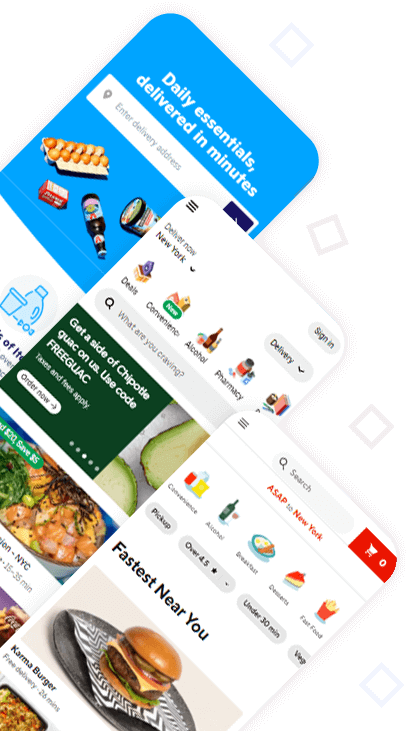
Sales and Marketing

Applying a food scraping service can significantly impact the sales and marketing strategies professionals employ in the food industry. By leveraging the power of data scraping, businesses can obtain valuable insights into market trends, competitor pricing, and customer preferences. This data-driven approach enables targeted marketing tactics, effective pricing models, and personalized customer engagement. It provides sales teams with real-time information, allowing them to adapt quickly to changing market demands, optimize product offerings, and enhance customer satisfaction, ultimately leading to sales growth and market dominance.
App
  • Competitor Analysis
  • Marketing Campaigns
  • Data-Driven Insights
  • Review Analysis
  • Market Research

Unlock the Benefits of Data With Foodspark

Grow Your Food and Grocery Delivery Business with Our Cutting-edge Data Scraping Solutions.

Other Use Cases

From Restaurant menus to ingredient lists, nutrition facts to pricing details, our data scraping solutions offer endless possibilities.

Food Market Penetration

Use the real-time data including pricing, competitor analysis, menu trends, and consumer preferences to drive market penetration.

Food Chain

Gain a competitive edge by accessing real-time information on menus, pricing, customer feedback and ingredient sourcing.

Food Brand Owner

Get valuable market insights, monitor competitor pricing, and harness real-time data on ingredient trends.

Frequently Asked Questions

COMMON QUERIES

Before You Decide to Get Data for Your Business, Have a look at commonly asked questions and their answers

We can extract restaurant data, menu items, food prices, grocery products, reviews, ratings, offers, delivery fees, stock availability, locations, and platform-specific food data.

Yes, data can be collected from food delivery apps, grocery platforms, restaurant listing sites, quick commerce apps, and food aggregator platforms based on your business needs.

Yes, custom datasets can be prepared by country, city, platform, cuisine, product category, restaurant type, grocery category, or any required data field.

Yes, real-time and scheduled food data APIs are available for businesses that need fresh pricing, availability, menu, review, and delivery data.

Common fields include restaurant name, menu item, price, discount, rating, review count, address, latitude, longitude, cuisine, product name, stock status, delivery time, and source URL.

Data can be delivered in CSV, Excel, JSON, XML, API, database-ready format, cloud storage, or any custom format required by your team.

Yes, businesses can use this data to monitor competitor prices, track discounts, compare menus, analyze product availability, and identify market trends across platforms.

Data is cleaned, structured, validated, and checked for duplicate or missing values. Refresh frequency can be set as real-time, daily, weekly, monthly, or custom.

Yes, structured food data can be used for AI model training, business intelligence dashboards, pricing analysis, demand forecasting, market research, and competitor intelligence.

Yes, sample data can be provided so you can review the structure, fields, format, and quality before starting a custom data project.

Foodspark FAQs

Here’s What’s Happening

From our blog
Ghost Kitchen vs Traditional Restaurant in the US Food Delivery Market 2026 Growth, Trends & Data Analysis

Ghost Kitchen vs Traditional Restaurant in USA 2026: Cost, Data & Trends

Food Data API vs Food Scraping: Which One Should Businesses Choose?

Food businesses today depend on accurate and timely data to understand customer preferences, monitor competitors, optimize pricing, and identify new...

Read more

How Businesses Use Zomato Listing Data for Restaurant Market Insights

What if your competitor’s menus, prices, ratings, reviews, and restaurant locations could tell you exactly where the market is heading?...

Read more