Michigan Grocery Store Data Scraping: 10 Largest Chains Dataset (2026) Get The Full Insight

What Are the Benefits to Scrape Quick Commerce Data in Tier-2 Cities in India?

Quick Commerce Data Tier-2 Cities

Introduction: The Quick Commerce Boom Beyond Metro Cities 

Ten minute grocery delivery service built its reputation in Mumbai, Delhi, and Bengaluru. Investors poured money into metro dark stores. Platforms competed aggressively for the urban consumer. That phase played out largely as expected. 

What nobody fully anticipated was how quickly the demand signal would travel. Indore started showing order volumes that surprised platform operators. Surat consumers began expecting the same delivery speed their metro counterparts had normalized. Lucknow, Jaipur, Nagpur, Coimbatore — city after city crossed the threshold from early adoption into routine usage faster than most market projections suggested was possible. 

The investor community has noticed. Logistics capital is flowing into non-metro warehousing. Platform expansion roadmaps now list Tier-2 cities prominently rather than treating them as phase three afterthoughts. 

Meanwhile, most brands are still running their data operations from a metro-first playbook. Reports get built on Tier-1 signals. Pricing benchmarks reflect metro competition. Demand models draw from urban consumer panels. The result is a growing strategic blind spot at exactly the moment when Tier-2 markets are moving fastest. 

Foodspark addresses this directly through advanced food data scraping and structured grocery data scraping solutions built specifically for the platforms and geographies where this next phase of growth is unfolding. 

What Is Quick Commerce Data? 

Before examining the benefits, it helps to be precise about what quick commerce data actually is. This is not general ecommerce reporting or category level market research. It is platform specific, location specific, and time sensitive intelligence extracted directly from live consumer facing environments. 

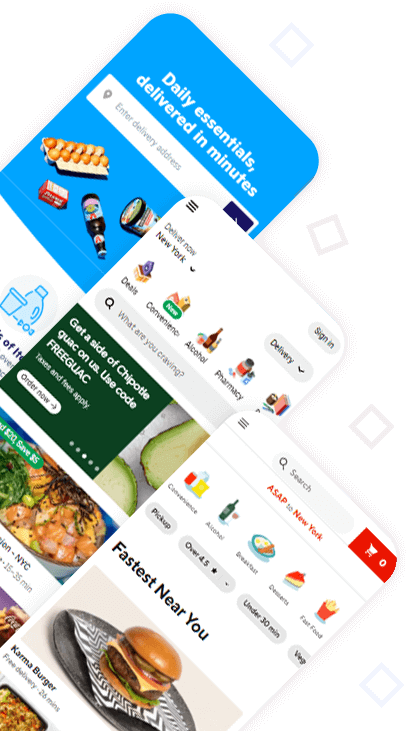
Quick commerce data scraping in India collects important information from platforms like Blinkit, Zepto, and Swiggy Instamart. This includes: 

  • Product listings that show item names, brands, categories, and available options. 
  • Live pricing shows the current selling price, the manufacturer’s recommended retail price (MRP), and the discount at the time you check. 
  • Stock availability tells you if products are available, out of stock, or low in supply. 
  • Delivery fees are listed by platform and specific PIN codes. 
  • Active promotions include flash sales, bundle deals, and loyalty offers. 
  • Dark store location data that includes warehouse addresses, operational areas, and serviceable PIN codes. 
  • Category performance trends that track which product groups are gaining or losing popularity in different cities. 

When you deliver this data via a grocery data API in India, it provides real-time input for pricing teams, supply chain managers, brand strategists, and analysts, rather than serving only as a static reference document. 

Why Tier-2 Cities in India Are the Next Growth Engine? 

Describing Tier-2 cities as an emerging opportunity understates what is already happening on the ground. Several of these cities have crossed from potential to active market, and the underlying conditions driving that shift are structural rather than cyclical. 

Smartphone penetration has reached genuine scale. 

Affordable 4G and 5G connectivity has given non-metro consumers the same app access that drove quick commerce adoption in metros. The digital precondition for platform growth is satisfied across most Tier-2 markets today. 

Disposable income growth has changed consumer priorities.

 In cities like Lucknow, Surat, and Nagpur, the combination of lower cost of living and rising household incomes has pushed convenience up the priority list. Price sensitivity still exists but it competes now against a genuine appetite for faster, more reliable grocery access. 

Logistics infrastructure has been built out.

Cold chain facilities, micro fulfilment operations, and last mile delivery networks are active in cities that would not have supported quick commerce operations three years ago. The physical infrastructure that platforms need to operate is available. 

Competitive density remains low enough to matter.

In Bengaluru or Mumbai, every major platform is competing intensely for the same consumer base. In Patna or Coimbatore, the competitive field looks substantially different. A brand entering with solid data today operates against fewer well-established rivals and has room to build meaningful market position before saturation sets in. 

Key Benefits of Scraping Quick Commerce Data in Tier-2 Cities 

1. Identify Emerging Demand Patterns 

National sales data smooths over the regional variations that drive actual performance differences between markets. Scraping grocery pricing data in small cities India produces city specific, SKU level demand signals that aggregate reports do not contain. 

What sells in Jaipur this month is genuinely different from what moves in Surat or Lucknow. Cooking oil preferences shift between western and eastern India. Dairy purchasing patterns reflect local dietary culture. Packaged snack trends in a university city differ measurably from those in an industrial town. Quick commerce data scraping captures these distinctions from actual platform behavior in near real time, not from consumer surveys reconstructed weeks after the fact. 

Brand penetration trends also become visible at the SKU level. Which national brands are gaining ground in specific categories. Which local competitors are holding share despite metro brand investment. These are signals that change distribution and marketing decisions when they are available. 

2. Hyperlocal Pricing Intelligence 

Uniform national pricing applied across Indian markets is a consistent source of competitive underperformance. A product priced at Rs. 120 in Bengaluru faces a completely different competitive reality in Lucknow, where local alternatives and different consumer price sensitivity create conditions that a metro derived pricing strategy was not designed to address. 

Advanced grocery data scraping enables city level and PIN code level price comparison across all monitored platforms simultaneously. Pricing teams identify exactly where they are losing competitiveness. They find where pricing adjustments would recover margin without volume loss. Regional price gap analysis becomes a routine function rather than periodic exercise. 

Foodspark makes this comparison possible at scale across multiple Tier-2 cities at the same time. 

Data Insight Tier-1 Reality Tier-2 Opportunity 
Price variance across platforms Compressed by intense competition Wider gaps with genuine optimization potential 
Category penetration depth Mature and difficult to disrupt Early stage with real first mover room 
Brand loyalty dynamics National brands deeply embedded Local brands hold substantial consumer share 
Delivery fee sensitivity Moderate among higher income consumers High sensitivity directly influencing platform choice 
Stock out occurrence rate Infrequent in mature supply environments Regular enough to expose clear distribution gaps 

3. Inventory and Stock Visibility 

Real-time quick commerce data API gives brands continuous visibility into product availability across multiple platforms and cities simultaneously. For FMCG companies managing wide distribution networks, this changes how supply chain decisions get made. 

A product that consistently drops out of stock in Surat by midweek while remaining fully available in Ahmedabad through the weekend is communicating something specific about supply chain coverage. That pattern, captured through consistent data extraction, becomes a direct input for the distribution team. Without the data, the gap goes undetected or gets identified only after it has quietly affected sales performance for months. 

Seasonal demand tied to regional festivals, weather patterns, and agricultural cycles also becomes trackable and manageable when inventory data is monitored consistently rather than reviewed occasionally. 

4. Competitive Benchmarking 

Blinkit data scrapingZepto data scraping, and Swiggy Instamart data extraction through Foodspark produce structured, direct comparisons of how these platforms operate within specific Tier-2 cities. Assortment depth, category breadth, delivery fee positioning, promotional frequency, and product availability rates all become measurable side by side. 

No secondary research source provides this comparison. Consultant reports do not carry it. Industry databases do not track it at this level of granularity. It requires direct extraction from live platform environments, handled by data infrastructure with the technical capability to do it accurately and at a consistent scale. 

5. Market Expansion Planning 

Where should the next dark store be located? Which micro-market is genuinely underserved versus which one only appears underserved from a distance? Which categories have real unmet demand in a specific city versus which ones face invisible local competition? 

Extracting hyperlocal grocery data India provides factual answers. PIN code level coverage analysis, demand density mapping, and delivery time gap data give logistics planners, brand managers, and warehouse strategists concrete evidence to work with. Market entry decisions reflect actual conditions rather than optimistic assumptions. The risk profile of expansion drops measurably when real data replaces internal conviction. 

Use Cases for Quick Commerce Data in Tier-2 Cities 

Quick commerce market intelligence serves a wider range of business functions than most teams initially assume. The value extends well beyond brand marketing departments. 

Industry Segment Primary Application 
Grocery Chains City level shelf benchmarking and competitive assortment analysis 
FMCG Brands Distribution gap tracking and stock out pattern identification 
Distributors Demand validation before committing inventory to new markets 
Market Research Firms Hyperlocal category reports and city specific consumer demand analysis 
Investors and VC Firms Due diligence on quick commerce operations in non-metro markets 
Private Label Brands White space identification in categories where national brands are thin 
Warehouse and Real Estate Planners Dark store placement optimization using demand density and coverage data 

Foodspark builds tailored food data scraping solutions and scalable grocery data API infrastructure for each of these segments. 

What Data Fields Can Be Extracted? 

The food data scraping infrastructure at Foodspark captures data across three structured layers. Each layer serves distinct analytical and operational purposes. 

Product Level Data 

Every product visible on a quick commerce platform generates extractable information. Product name, brand, SKU identifier, category classification, current selling price, MRP, applied discount percentage, stock status, and pack size details are all captured. Pricing analysts and brand managers rely on this layer for competitive benchmarking and assortment tracking across cities. 

Location Level Data 

This layer maps the geographic footprint of platform operations across Tier-2 cities. Dark store addresses, serviceable PIN codes, estimated delivery windows by zone, and city tier classification are all tracked consistently. Distribution planning teams and warehouse strategists use this layer to assess coverage quality and identify underserved areas that represent expansion targets. 

Promotion Level Data 

Promotional conditions on quick commerce platforms shift frequently. Flash sale structures, bundle offer configurations, regional discount campaigns, loyalty program mechanics, and clearance pricing are all captured within this layer. Brands use promotion data to track competitive campaign intensity and calibrate the timing of their own promotional activity accordingly. 

The Foodspark grocery data API delivers all three layers in formats compatible with major BI dashboards and data warehouse environments. Bulk file delivery is also available for teams working in offline analytical workflows. 

Challenges Without Data in Tier-2 Markets 

Expansion decisions made without reliable data produce patterns that are well documented. The following outcomes repeat consistently when brands enter Tier-2 quick commerce markets without adequate intelligence. 

Wrong Platform Prioritization 

In many Tier-2 cities, one platform commands a disproportionate share of consumer activity. Brands that do not know which platform dominates in each specific market allocate resources to platforms that do not deliver expected reach or returns. 

Pricing That Misses Local Reality 

National pricing carried into regional markets without local benchmarking either destroys margin unnecessarily or prices the brand outside competitive consideration entirely against local alternatives. 

Inventory Misallocation

Product categories performing strongly in metro markets carry different velocity profiles in smaller cities. Capital tied up in slow moving inventory represents a direct opportunity cost that compounds over time. 

Missed Regional Demand Cycles

Festival seasons, agricultural cycles, and regional climate patterns drive category specific demand spikes in Tier-2 cities that do not align with metro demand calendars. Brands without local data miss these windows and the sales volume that comes with them. 

Suboptimal Warehouse Placement 

Dark stores placed without demand density analysis land in zones that do not match actual consumer distribution. The outcomes are higher cost per delivery and weaker service coverage than the market could support with better located infrastructure. 

Food data scraping addresses each of these risks by replacing assumptions with direct market evidence at every stage of the expansion process. 

How Foodspark Helps You Scrape Quick Commerce Data? 

Foodspark delivers quick commerce data scraping India through a structured six stage process. Every stage is designed to produce data that is accurate, clean, and immediately usable. 

Stage 1: Requirement Analysis   

Every project begins with a plan. We confirm the target platforms, Tier-2 cities, product categories, and the frequency of data updates before we start. 

Stage 2: Advanced Grocery Data Scraping   

We build custom systems to gather data from Blinkit, Zepto, Swiggy Instamart, and other key platforms for our clients. 

Stage 3: Real-Time or Scheduled Scraping   

Clients can choose between live data feeds that update continuously or scheduled updates at specific times, based on how urgent the data is for their needs. 

Stage 4: Data Cleaning and Structuring   

We clean up the raw data by removing duplicates and formatting it. The final data meets the client’s requirements and works well with their analysis tools. 

Stage 5: API or Bulk File Delivery   

Clients can receive the final data via the Foodspark.io grocery data API or via secure bulk file transfer, whichever they prefer. 

Stage 6: Ongoing Monitoring and Quality Assurance   

We keep an eye on platform structures, product catalogs, and promotional details, as these often change. It ensures the data stays accurate as the source platforms evolve. 

Future of Quick Commerce in Tier-2 Cities (2026 to 2028 Outlook) 

Tier-2 cities quick commerce growth has considerably further to run. The structural conditions supporting current expansion are strengthening rather than stabilizing, and investment patterns reflect that trajectory clearly. 

Trend Current Position in 2026 Expected Trajectory by 2028 
Dark store coverage Operational across top 30 Tier-2 cities Scaling toward coverage across 100 plus cities 
Local startup activity Early stage across most non-metro markets Significant Series A and B funding rounds emerging 
Delivery speed benchmarks 10 to 30 minutes in established zones Sub 10 minutes available in core urban areas 
Demand prediction capability Primarily metro trained AI systems Hyperlocal models built on Tier-2 specific datasets 
Investor and VC interest Consistent growth in deal flow Central theme in Indian consumer growth stage investment 

Businesses that build quick commerce market intelligence infrastructure today are creating data assets that appreciate in value as these markets mature. Foodspark clients establishing Tier-2 data pipelines now will hold structural knowledge advantages that later entrants will find genuinely difficult to close. 

Get Tier-2 Quick Commerce Data Today 

Foodspark delivers the data infrastructure brands, FMCG companies, distributors, investors, and research teams need to operate with confidence across India’s Tier-2 quick commerce markets. 

Whether the goal is to scrape quick commerce data in Tier-2 cities, access structured grocery data scraping outputs, integrate a grocery data API into an existing analytics stack, or monitor hyperlocal grocery pricing across multiple platforms, Foodspark has purpose built solutions available today. 

What clients receive: 

  • City level pricing and availability monitoring across Blinkit, Zepto, and Swiggy Instamart 
  • Real time and scheduled stock tracking across multiple platforms and cities simultaneously 
  • Hyperlocal grocery pricing data, delivery fee analysis, and SKU level category performance data 
  • Clean structured outputs delivered via grocery data API or bulk file transfer, ready for immediate use 

Get Started

Need Quick Commerce Data from Tier-2 Cities in india?

Extract pricing, inventory, and demand insights with Foodspark.

Get started Today!
cta-bg

FAQ

What is quick commerce data?  

It is structured, platform extracted information covering product prices, stock levels, discounts, and delivery details pulled directly from rapid delivery grocery platforms like Blinkit, Zepto, and Swiggy Instamart. 

Why are Tier-2 cities important for quick commerce in India?  

Rising incomes, normalized app usage, lower competitive density, and expanding logistics infrastructure have made these cities the most active current growth geography for quick commerce platform investment and expansion. 

How can I scrape quick commerce grocery data?  

Working with a specialist provider like Foodspark is the most practical route. The complete process covering extraction, cleaning, structuring, and delivery is managed end to end. 

Is grocery data scraping legal in India?  

Extracting publicly visible platform data is generally permissible under Indian law. Compliance with platform terms of service and applicable regulations remains essential. Foodspark maintains a compliance first framework across all engagements. 

How often should quick commerce data be updated?  

Daily or real time updates serve pricing and availability monitoring well. Weekly or biweekly refresh cycles are adequate for trend analysis and competitive benchmarking purposes. 

Table of Contents