What Are the Benefits to Scrape Quick Commerce Data in Tier-2 Cities in India? Get The Full Insight

What Is Food Data Scraping and How Does It Work?

What Is Food Data Scraping & How Does It Work?

Prices on food delivery apps change without warning. A restaurant quietly adds a delivery surcharge. A competitor drops their minimum order amount on weekends. Another one pulls a top-selling item off the menu entirely. None of this gets communicated to the businesses that need to know about it.

That is the core problem food data scraping solves. It automatically pulls publicly available information from food platforms on a schedule, in a format that is actually usable, so businesses are not discovering competitor moves three weeks after they happen.

This blog covers what food data extraction is, how each stage of the process works, what data Foodspark collects, and how to make an informed decision about whether to build this capability internally or work with a specialist.

What Is Food Data Scraping?

Food data scraping is the automated collection of data from online food platforms. Software visits target URLs, reads the page HTML, locates specific fields like menu items, prices, ratings, and delivery fees, and saves the output in a structured, usable format. No human needs to be involved at each step.

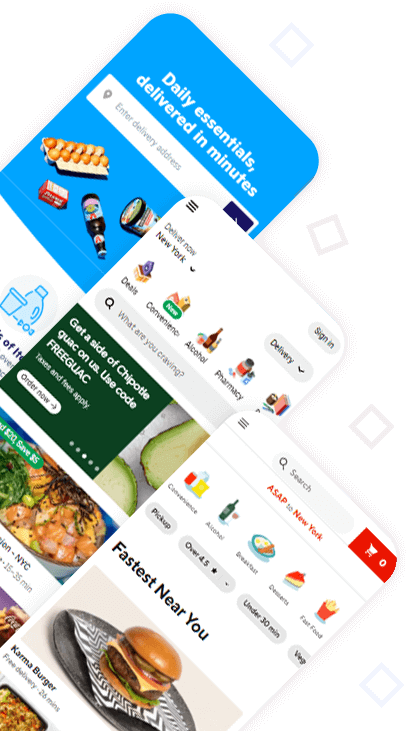
The platforms that matter most for web scraping for food data are delivery apps like DoorDash, Uber Eats, Grubhub, and Zomato, review platforms like Yelp and TripAdvisor, grocery delivery services like Instacart, and restaurant websites with active ordering systems.

It is worth being direct about something: food data scraping is technically more demanding than scraping most other industries. Food platforms update their page architecture constantly. They serve content through JavaScript frameworks that standard crawlers cannot handle. They run bot detection that blocks unsophisticated tools quickly. A scraping solution built specifically around food industry platforms deals with all of this. A generic tool does not, and that difference shows up fast.

How Does Food Data Scraping Work?

Food data scraping works by automatically extracting structured information like menus, prices, ratings, and availability from online food platforms, helping businesses gain real-time insights for smarter decision-making.

How Does the Scraper Access a Page?

A scraper sends an HTTP request to a target URL, the same action a browser takes when you navigate to a site. The server returns content and the scraper begins parsing what it receives.

Static pages are straightforward. The challenge is that most major food delivery platforms use JavaScript frameworks loading content dynamically after the initial page request. A standard scraper requesting raw HTML gets back an empty shell with no menu data or pricing in it. Handling these platforms requires headless browsers like Puppeteer or Playwright, which simulate a full browser environment, execute the JavaScript, wait for content to render, and then extract data from the completed page. On modern food platforms, there is simply no accurate alternative.

How Does the Scraper Find the Right Data?

CSS selectors or XPath expressions function as precise coordinates pointing to specific elements within the HTML structure. One selector identifies the dish name container. Another point to the price field. A third locates the rating. The scraper reads the value at each address and writes it to the output.

Platforms redesign their frontends regularly, and when they do, element locations shift, selectors break, and scrapers stop returning accurate data. Keeping configurations current is a real ongoing cost that teams consistently underestimate before committing to building in-house.

What Happens After Extraction?

Raw scraped data is rarely usable directly. Duplicates appear when items show up across multiple pages. Formatting varies across platforms. Fields come back blank from pages that did not fully load. A proper food data scraping pipeline includes validation and cleaning before delivery. Foodspark handles this as standard — clients receive structured, deduplicated, consistently formatted output rather than raw data needing further work.

How Is Data Delivered?

API feeds link directly into different dashboards or pricing tools, while teams working with an analytics tool typically use scheduled CSV and JSON exports as their means of collecting/analysing data. For more complex downstream requirements, there are direct database integrations. Foodspark offers support for all three, with configurable refresh cycles based upon the frequency of change to source data.

What Types of Food Data Can You Access?

One of the first questions businesses ask when they consider whether to outsource food data scraping or build their own capability is what data is actually collectible. The answer covers considerably more ground than most expect.

Data CategorySpecific Data PointsPrimary Business Use
Menu DataDish names, descriptions, categories, modifiers, and availabilityCompetitive benchmarking, catalog analysis
Pricing DataItem prices, bundle pricing, surge rates, promotional discountsPricing strategy, margin analysis
Ratings and ReviewsStar scores, review text, volume, sentiment trendsReputation monitoring, customer research
Nutritional InformationCalories, macronutrients, allergen flags, serving sizesHealth tech, diet apps, compliance tools
Delivery MetricsEstimated delivery time, fees, service zone boundariesLogistics planning, experience benchmarking
Restaurant MetadataAddress, operating hours, cuisine type, contact informationMarket mapping, expansion research

Foodspark collects across all of these categories simultaneously, pulling from multiple platforms with consistent update schedules so clients always have current data rather than information that was accurate three weeks ago.

Manual vs. Automated Food Data Scraping

Most organizations start with manual data collection because it requires no upfront technical investment. Someone checks competitor listings, records figures in a spreadsheet, and that is the process. It works on a small scale. It breaks down quickly once the data requirement grows.

Here is a direct comparison of where the two approaches differ.

FactorManual CollectionAutomated Food Data Scraping
SpeedHours per sourceHundreds of pages per minute
AccuracyProne to entry errorsConsistent and repeatable output
ScaleA few sources at a timeThousands of sources simultaneously
Cost Over TimeGrows with every new source addedStabilizes after initial pipeline setup
Real-Time UpdatesNot practically feasibleSchedulable at any frequency
Data VolumeLowMillions of records per run

Automated food data collection is the only option that scales without proportionally scaling the cost or the team behind it. Manual collection has legitimate uses in early research. Beyond that, it becomes a constraint rather than a solution.

What Are The Key Benefits of Food Data Scraping?

The benefits of food data scraping reach across pricing, product development, customer research, and supply chain planning. Below are the applications with the clearest impact.

Competitive Pricing Intelligence

Continuous competitor pricing data changes the speed and quality of pricing decisions. When a competitor adjusts their delivery minimum on a Thursday morning, businesses running active Foodspark pipelines know about it the same day. Without that infrastructure, the same discovery might happen a week later, or not at all. In competitive delivery markets, that lag matters.

Customer Preference Analysis

Internal surveys tell part of the story. Scraping review data from thousands of sources tells a much more complete story. Running sentiment analysis across this volume surfaces consistent patterns: what brings customers back, what drives complaints, and which service aspects matter most to repeat buyers. The depth here is not something survey research can replicate at an equivalent scale.

Menu Trend Identification

Comparing menus from the competition over time provides insights that are otherwise not available with just one snapshot. Expansion in categories across multiple channels demonstrates actual market demand. Items being eliminated from multiple competitors indicate a decline in demand. Product teams who use this type of data will use evidence, not just assumptions, to make decisions on product launches.

Hyperlocal Market Research

Analyzing food delivery data scraping for filtering purposes can help a franchise understand which cuisines are the most sought after in different neighborhoods or how prices and volume trend among demographic groups, as well as where there are opportunities to fill gaps in delivery. Analyzing this data at a local level provides critical information for determining where to open new franchises and develop a growth strategy. However, aggregate data will not provide the necessary level of detail for this type of analysis.

Supply Chain and Demand Forecasting

Grocery delivery platforms and meal kit services use scraped availability and pricing signals to anticipate ingredient demand before supply issues become visible. Forecasting built on live market data consistently outperforms models built on historical patterns alone.

Nutritional Benchmarking

Health-focused food brands use food data extraction to track competitive nutritional profiles across product categories. This supports both product formulation decisions and compliance review in markets with active labeling enforcement.

What Are The Challenges in Food Data Collection?

The challenges in food data collection deserve a straightforward explanation. They are significant, and organizations that underestimate them tend to run into trouble quickly.

Major online platforms have very effective, advanced, and well-maintained anti-scraping capabilities. Some ways that these companies have created systems to stop scraping is through CAPTCHA (to identify humans), behavioral bot detection, constant patrols by sharing IP addresses for each requester, and establishing a system of rotating sessions to limit how often a bot can access the same data.

Getting through them reliably requires rotating proxy infrastructure, browser fingerprint variation, and ongoing technical updates that keep pace with platform defense changes.

JavaScript rendering stops many in-house scraping projects before they produce anything useful. Platforms built on React, Vue, or Angular do not include actual content in the initial HTML response. A standard scraper hits the page and gets back essentially nothing. Headless browsers solve this but add infrastructure complexity and cost.

Data inconsistency across platforms is a normalization problem that is easier to underestimate than to solve. Price formats, rating systems, category labels, and menu architecture all differ across sources. Maintaining a consistent output schema requires ongoing logic updates as platforms change their formats.

Regardless of your ability to technically scrape data, it is important to make sure you are following the law and complying with ethical obligations of the community and your organization when doing so. Most publicly available data is perfectly legal to scrape, but robots.txt must be followed, personal data of individual users must be excluded from your scraping activities, and you need to know how your data protection laws (e.g., GDPR and CCPA) apply to any scraping being done before running your scrape.

Maintenance overhead is what surprises in-house teams most consistently. Sites update their HTML layout. Scrapers break. Developer time that was supposed to go toward new capabilities goes toward keeping existing ones functional. That cost compounds month over month.

Foodspark manages all of this within the service delivery model. Clients get clean, normalized, compliance-checked data. The operational burden sits on Foodspark’s side.

Should You Build In-House or Outsource Food Data Scraping?

This comes down to three practical questions: what internal technical capacity actually exists, how quickly results are needed, and how stable the source list is over time.

Building In-House

Internal infrastructure gives full control over schema design, update frequency, and pipeline architecture. For organizations with a dedicated data engineering team and a small, structurally stable source list, this can work. The total cost of ownership tends to run higher than initial estimates suggest, though. Proxy management, change monitoring, infrastructure scaling, and developer maintenance all accumulate. Teams that go this route frequently find they are spending more engineering hours keeping the pipeline running than expanding what it delivers.

Outsource Food Data Scraping

When organizations outsource food data scraping to Foodspark, they get production-ready pipelines without the infrastructure overhead. Deployment is faster. Technical risk is managed by a team focused on exactly this problem. Internal resources stay on analysis and decision-making rather than on keeping collection infrastructure operational.

Outsourcing is clearly the better choice when:

  • Data requirements span dozens or hundreds of sources
  • The team lacks dedicated scraping expertise
  • Normalized, delivery-ready data is a firm operational requirement
  • Continuous data freshness is critical to the business function it supports

Building in-house makes sense when:

  • Dedicated engineering capacity genuinely exists and is not committed elsewhere
  • Source targets are small in number and unlikely to change structure
  • Custom pipeline architecture at every stage is a hard, non-negotiable requirement

For most businesses looking to hire a food data scraping company, outsourcing delivers better results faster with less operational risk.

How Foodspark Delivers Food Data at Scale?

Foodspark is a purpose-built food data scraping service designed specifically for the food and beverage industry. It was not adapted from a general-purpose tool. The platform was built from the start around the architecture of food delivery ecosystems, multi-location restaurant networks, and grocery platforms.

What Foodspark provides:

  • Pre-built web scraping software for use with Uber Eats, DoorDash, Zomato, Yelp, Grubhub, and other sites
  • Real-time and scheduled delivery using REST API or structured flat files
  • Custom extraction logic to scrape data for menus, pricing, ratings, delivery parameters, and promotions
  • Quality validations and normalization occur prior to the data being made available to the client
  • Operations are compliant with platform terms of service and data regulations.

Whether the requirement is a one-time competitive audit or a continuous food delivery data scraping pipeline running at high volume, Foodspark has the infrastructure and domain expertise to deliver it.

Conclusion

Food data scraping is now a standard competitive capability across the food industry, not a niche technical experiment. Businesses that run reliable automated food data collection pipelines make faster, better-informed decisions on pricing, product development, and market expansion.

Building this capability does not require starting from zero. Foodspark provides the infrastructure, domain knowledge, and compliance framework to deliver it directly, from targeted one-time extractions to high-volume continuous pipelines.

Get Started

Turn Food Data into Business Insights – Get Started

See how Foodspark’s advanced food data scraping helps you gain an edge in a competitive market.

Get started Today!
cta-bg

FAQ

1. How does scraping data work?

HTTP requests enable crawlers to target a URL to extract data fields from the resulting HTML code. The crawler will then output the extracted data as JSON or CSV files for businesses’ future use.

2. Is scraping legal?

Most countries allow scraping if the data is publicly available; however, scraping doesn’t give a business the right to break robots.txt files, collect private data or violate a platform’s terms of service prior to creating a scrape method.

3. What is food data scraping and how can it help my business?

Food data scraping automates the collection of menus, pricing, ratings, and delivery data from food platforms, enabling faster competitor monitoring, smarter pricing decisions, and market trend tracking at a scale manual research cannot reach.

4. What types of food data can I access (menus, pricing, ratings, etc.)?

Through food data extraction, businesses can collect menu items, pricing structures, customer ratings, delivery fees, promotional offers, restaurant profiles, nutritional data, and cuisine classifications across major food platforms and directories.

5. How can food data scraping improve my pricing strategy?

Real time data regarding competitor pricing allows faster responses to changes in the market, closing of gaps in price positions, and greater use of dynamic pricing methods which increase revenue and improve competitive position, across all basic delivery systems.

6. How does scraped data help in understanding customer preferences?

Review data analyzed at scale helps us identify and understand the patterns of sentiment across thousands of customer reviews. This analysis shows us what products are successful, customer dissatisfaction, and what dietary preferences are growing significantly.

Table of Contents