How Food Aggregator API Integration Can Transform Restaurant Data Management in 2027 Get The Full Insight ✕
How Does Food Delivery Data Help Brands Identify Local Market Gaps?

How Food Delivery Data Helps Brands Identify Local Market Gaps

Two neighborhoods just a few miles apart can have completely different food delivery preferences. One may have plenty of pizza and burger outlets but limited healthy meal options, while another may have strong demand for affordable family meals but very few restaurants serving that segment. For restaurant chains, cloud kitchens, and food delivery businesses, recognizing these differences can reveal valuable growth opportunities.

Food delivery data helps brands understand these local market conditions by bringing together information about restaurant locations, menu items, pricing, delivery fees, ratings, and customer reviews. Analyzing these signals through food delivery data analysis can uncover underserved cuisines, pricing opportunities, and areas where existing restaurants are falling short.

This blog explores the key data points, analysis methods, and practical applications businesses can use to identify local market gaps and make better expansion decisions.

What Is Food Delivery Data and How Does It Support Market Research?

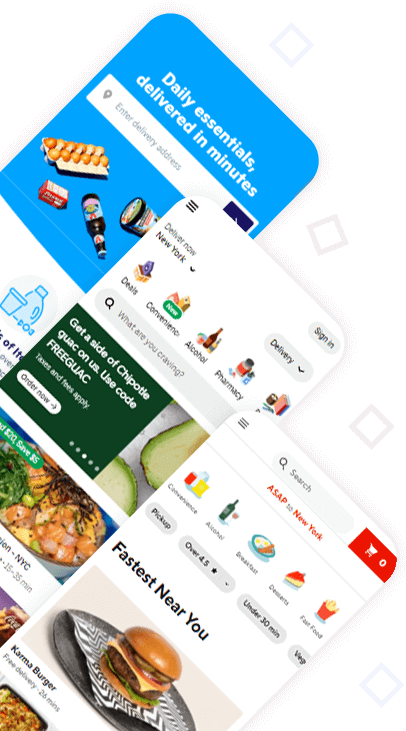
Food delivery data is the structured information held inside apps like Uber Eats, DoorDash, Grubhub, and regional aggregators. It covers menus, item prices, restaurant locations, delivery fees, estimated delivery times, cuisine categories, promotions, and the ratings and reviews customers leave after each order. A single listing is just noise, but pulled together across a city, it becomes a living map of demand and supply.

The stakes are large and growing. Statista projects global meal-delivery revenue of roughly $455.7 billion for 2025, while IMARC Group values the U.S. online food delivery market at $34.9 billion in 2025, with a path toward $75.4 billion by 2034. Preference has shifted to the platforms too, as about 51% of Americans now say they would rather order through third-party apps or websites than go direct. DoorDash alone commands close to two-thirds of the U.S. market, which means a handful of apps hold a detailed, real-time record of what people order and where. Reading that record through reliable food delivery data scraping services delivers the kind of market insights that once took months of surveys and store visits.

How Can Food Delivery Data Reveal Untapped Local Market Opportunities?

Food delivery data helps businesses identify gaps by comparing restaurant availability, menu variety, pricing, customer feedback, and delivery performance across different locations.

The following indicators can help brands understand where opportunities exist.

1. Limited cuisine availability

Compare restaurant listings across neighborhoods to understand which cuisines are widely available and which remain underrepresented.

For example, an area with several burger and pizza outlets but very few healthy meal providers may present an opportunity for a salad-focused cloud kitchen.

2. Unserved price segments

Analyze competitor menu prices to identify gaps between budget-friendly meals, mid-range offerings, and premium dining options.

A neighborhood where most restaurants offer meals above $20 may have room for an affordable meal concept, provided customer demand supports it.

3. Delivery performance gaps

Compare estimated delivery times and delivery charges across restaurants serving the same area.

Consistently higher delivery times or charges may indicate operational challenges that a competing restaurant could investigate and potentially address.

4. Recurring customer complaints

Analyze ratings and reviews data to identify repeated concerns about food quality, portion sizes, packaging, delivery delays, and menu availability.

These patterns can help brands identify customer expectations that existing competitors may not be meeting.

5. Limited availability during peak hours

Compare restaurant operating hours, delivery availability, and other authorized demand indicators during breakfast, lunch, dinner, and late-night periods.

This can help businesses identify time slots where restaurant availability is limited and investigate whether sufficient customer demand exists.

The important point is to evaluate these indicators together. Limited competition alone does not establish a profitable opportunity. Brands must also validate customer demand, operating costs, delivery feasibility, and local preferences before making expansion decisions.

Which Data Points Reveal the Biggest Local Market Gaps?

Fields carry different weight. The table maps the data points worth prioritizing, what each one tells you, and the specific local market gaps it tends to expose during competitive analysis.

Data pointWhat it tells youThe gap it usually surfaces
Menu items & categoriesThe full spread of cuisines and dishes people can actually order nearbyA whole cuisine or diet, say vegan or halal, that no kitchen covers well
Item pricingWhat rivals charge, dish by dishA missing price tier, usually the mid-range most families order midweek
Ratings & reviewsWhere customers are happy and, more useful, where they keep gripingService problems like late drops or thin portions that nobody has fixed
Delivery time & feesHow fast, and how cheaply, each area actually gets its foodSlow or pricey zones a quicker brand can walk straight into
Restaurant densityThe number of kitchens fighting over a single zip codeThin-supply pockets that still order plenty
Promotions & discountsHow hard competitors lean on deals to win ordersNeighborhoods where nobody is running a real value offer

How Can Restaurant Brands Use Food Delivery Data to Identify Market Gaps?

Here is how the process plays out in a realistic scenario. Picture a regional salad-and-bowl brand studying three zip codes in Austin before it signs a new lease.

Working example. Across the main aggregators, the team counts 48 restaurants delivering into the central zip code, yet only four offer a build-your-own healthy bowl, and all four price above $16 per order. Reviews for those four repeat two complaints: delivery past 25 minutes and portions that feel small. Order volume spikes between 11:30 a.m. and 1:00 p.m., but only two of the four kitchens stay fast through that lunch rush. The gap is now hard to miss, which is a mid-priced bowl concept, built around a tight lunch menu and a sub-20-minute promise.

The brand sets its signature bowl at $12.50, a clear step below the incumbents, and aims its launch marketing squarely at the 11:30-to-1:00 window the data flagged. Pricing, menu size, and delivery promise all trace back to specific numbers rather than a hunch.

Measurable target: if that zip code sees roughly 600 lunch delivery orders a day, capturing even 5% means about 30 extra orders daily, which is a concrete goal the data made visible before a single dollar was spent on the lease.

Published case studies follow the same pattern. Actowiz Solutions, for instance, documents a national fast-food chain that reshaped its regional pricing after analyzing delivery-platform data across markets.

How Is Food Delivery Data Collected, Cleaned, and Prepared for Analysis?

The insights are only as good as the pipeline behind them, and food delivery platforms are not simple pages to read. Listings load through JavaScript, change by location, and sit behind rate limits and anti-bot checks. A dependable workflow handles several technical steps before any gap analysis begins.

Collection and access

  • Each request is pinned to a specific zip code, so the menus and prices reflect that address rather than a default city-center fallback.
  • Dynamic pages only load through a headless browser, and rotating proxies keep the traffic under the platform’s radar.
  • Restaurant lists run across page after page, which means the crawler has to walk every category to capture the full set.

Cleaning and structuring

  • Menus from different apps rarely line up, so their fields get mapped into one layout of item, price, category, and modifier.
  • The same restaurant often shows up on three or four platforms at once, and deduplication keeps it counted only once.
  • Every address is geocoded down to a zip code and neighborhood, the step that makes true street-level comparison possible.
  • Prices and portions arrive in messy formats and get normalized into like-for-like numbers before any competitive analysis runs.

Once the records are structured and geocoded, scheduled refreshes track how prices, menus, and ratings move over time. That ongoing delivery data, pushed through an API or clean CSV and JSON feeds, is what lets a team detect a gap this week rather than next quarter.

What Business Benefits Come From Reading These Gaps?

Acting on the gaps pays off across almost every growth decision. These are the wins brands report most often:

  • Smarter site selection, because low-supply zip codes with proven demand become obvious targets for the next outlet or cloud kitchen.
  • Pricing that fits the neighborhood, since menu prices can be set against what nearby households already pay.
  • Menus shaped by real orders rather than guesswork, with dishes chosen from openings competitors leave behind.
  • Marketing budgets aimed at under-served areas, so ad spend lands where interest is high and rivals are weak.
  • Earlier warning signals, as a sudden drop in local ratings or a new competitor listing shows up in the data before it hits sales.

What Does the Journey From Raw Data to a Local Decision Look Like?

The infographic sums up the five-step loop that moves a brand from scattered listings to a confident local move.

What Mistakes Do Brands Make When Reading Delivery Data?

A few habits quietly weaken even clean, well-sourced data. The comparison below separates the common trap from the better practice.

Common trapBetter practice
One-time snapshots that go stale within weeks, so decisions rest on last season’s demand.Scheduled refreshes that keep the food data current, so gaps reflect what people order now.
City-wide averages that blur the difference between a busy downtown and a quiet suburb.Zip-code level views, because real local market gaps live in small pockets, not citywide numbers.
Watching only prices while ignoring the reviews that explain why customers switch.Reading sentiment next to pricing, which rounds out the competitive analysis.

Conclusion

Identifying local market gaps requires more than counting nearby restaurants. Businesses need to understand menu availability, competitor pricing, customer feedback, delivery performance, and the differences between individual neighborhoods.

Food delivery data brings these insights together, helping restaurant chains, cloud kitchens, and food delivery businesses evaluate expansion opportunities with greater confidence. However, identifying a gap is only the first step. Validating customer demand, operating costs, and local preferences is equally important before making business decisions.

Foodspark helps businesses collect and organize food delivery information through structured data extraction solutions. Explore our food delivery data scraping services to understand how reliable restaurant and menu datasets can support your market research and competitive analysis.

Get Started

Turn Local Market Gaps Into Actionable Insights

Use local food delivery data to uncover pricing gaps, underserved locations, and competitive opportunities.

Get Custom Data Today
cta-bg

FAQ : Food Delivery Data and Local Market Gaps

1. How does food delivery data help brands identify local market gaps?

It combines restaurant locations, menus, prices, delivery fees, ratings, and reviews for a specific area. Comparing those signals across neighborhoods shows which cuisines, price points, and delivery needs are under-served.

2. Which data points reveal the biggest market gaps?

The most useful are menu items and categories, item prices, ratings and reviews, delivery time and fees, restaurant density, and promotions. Each exposes a different gap, such as a missing cuisine, a missing price tier, unresolved customer complaints, or slow delivery zones.

3. Can food delivery data show underserved cuisines and price segments?

Yes. Comparing restaurant listings and menus across neighborhoods shows which cuisines are thin, and comparing item prices shows which tiers (budget, mid-range, premium) are missing. For example, an area with many burger and pizza outlets but few healthy meal options may suit a salad-focused concept.

4. Is a low number of competitors enough to prove a market gap?

No. Limited competition alone doesn’t prove an opportunity. Brands should also validate customer demand, operating costs, delivery feasibility, and local preferences before making expansion decisions.

5. Why does zip-code-level data matter?

City-wide averages blur the difference between a busy downtown and a quiet suburb. Zip-code-level views show small pockets where supply is thin and demand is steady, which is where most local gaps appear.

6. How often should food delivery data be refreshed?

A one-time snapshot can go stale quickly because menus, prices, and ratings change. Scheduled refreshes let you see how the market moves over time, and the right frequency depends on how fast your market changes.

7. What does a food delivery data scraping service deliver?

It collects publicly available data from delivery platforms and structures it into clean datasets, typically covering menus, prices, restaurant locations, fees, delivery times, ratings, reviews, and promotions. FoodSpark delivers data in formats such as CSV, JSON, XML or API feeds, and you can request a sample dataset to check the fields first.

8. Is it legal to use food delivery data for market research?

FoodSpark only collects publicly available information. Legality depends on how data is collected and used, so we recommend having your legal team review your specific use case.

Frequently Asked Questions

Table of Contents

Need Custom Food Data?
  • Custom Food Data Solutions
  • Choose Platforms, Fields, Formats
  • Flexible Data Delivery Formats

How Does Food Delivery Data Help Brands Identify Local Market Gaps?

How Food Delivery Data Helps Brands Identify Local Market Gaps

Table of Contents

Explore Our Latest Insights

How Food Delivery Data Helps Brands Identify Local Market Gaps

How Does Food Delivery Data Help Brands Identify Local Market Gaps?

How Food Aggregator API Integration Can Transform Restaurant Data Management in 2027

Food aggregator API integration connects delivery apps, such as DoorDash, Uber Eats, and Swiggy, to your restaurant’s own systems. So...

Read more

Competitor Menu Data for Cloud Kitchens: Pricing Guide 2027

Two cloud kitchens can sell the same butter chicken in the same delivery zone and still achieve very different sales....

Read more