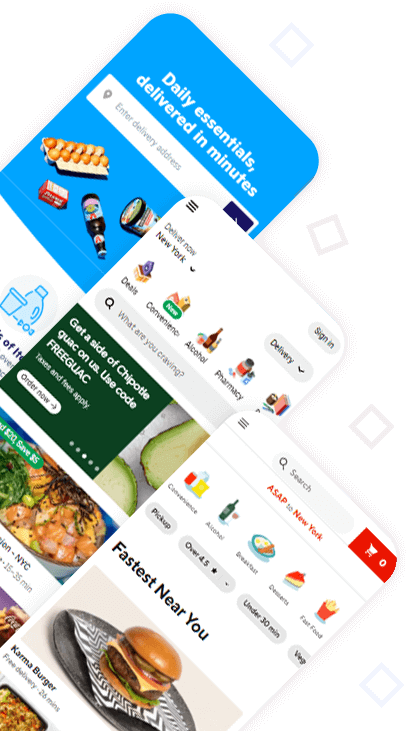
Brazil Food Data API for Restaurant, Grocery & Delivery Intelligence

Access structured food, restaurant, grocery, menu, pricing, review, and delivery data across Brazil through customizable API and dataset solutions.

FoodSpark helps food-tech companies, restaurant chains, aggregators, retailers, market researchers, and analytics teams turn fragmented Brazilian food-market data into structured intelligence for pricing analysis, competitor monitoring, market research, and application development.

Access Structured Food Data Across Brazil

Brazil’s digital food ecosystem spans restaurant marketplaces, delivery apps, grocery retailers, QSR chains, cafés, and online ordering platforms.

For businesses operating across cities such as São Paulo, Rio de Janeiro, Brasília, Belo Horizonte, Curitiba, Salvador, Recife, and Porto Alegre, manually monitoring restaurant listings, menus, product prices, promotions, reviews, and availability can become difficult to scale.

A food data API can organize this information into consistent records that businesses can connect with:

  • Analytics dashboards
  • Pricing systems
  • Market research workflows
  • Restaurant discovery applications
  • Competitive intelligence platforms
  • AI and machine-learning pipelines
  • Internal databases

FoodSpark’s broader food-data offering already covers restaurant, grocery, pricing, menu, review, availability, and delivery-related datasets.

What Brazil Food Data Can You Access?

The exact fields should depend on the platform and your project requirements.

Data CategoryExample Fields
Restaurant DataName, cuisine, address, location, operating hours
Menu DataCategories, dishes, descriptions, modifiers
Pricing DataListed price, promotional price, currency
Grocery DataProduct, brand, category, pack size, price
Reviews & RatingsRating, review count, permitted review fields
OffersDiscounts, deals, promotional labels
AvailabilityItem or restaurant availability
Delivery DataDelivery availability, service area, relevant fees
Location DataCity, neighborhood, latitude, longitude
MetadataSource, collection timestamp, refresh date

For Brazil-specific datasets, pricing should retain BRL currency, city, location, source, and observation timestamp so analysts do not compare unrelated price observations.

Brazil Food Delivery Data API

Brazil’s food-delivery market is highly competitive. iFood remains a major market player, while Rappi, 99Food, and Keeta are among the names shaping current competition.

Businesses can use delivery-market data to analyze:

  • Restaurant coverage
  • Cuisine availability
  • Menu assortment
  • Restaurant pricing
  • Promotions
  • Platform presence
  • Ratings
  • Geographic coverage

This type of intelligence is useful for restaurant chains evaluating marketplace presence, aggregators mapping market coverage, and analysts comparing food-delivery competition across Brazilian cities.

Restaurant & Menu Data for Brazil

Restaurant data can help businesses understand how food offerings vary across cities, cuisines, and restaurant formats.

Useful restaurant and menu fields include:

  • Restaurant name
  • Restaurant category
  • Cuisine
  • Menu category
  • Item name
  • Description
  • Size or variation
  • Modifier
  • Listed price
  • Offer
  • Location
  • Availability
  • Observation date

For competitor pricing analysis, retain the restaurant + item + location + price + timestamp combination rather than comparing price alone.

Grocery & Supermarket Data API for Brazil

Brazilian grocery-market intelligence can include product and pricing observations from online supermarket and grocery channels.

Businesses may use grocery data for:

  • Competitor price monitoring
  • Product assortment analysis
  • Promotion tracking
  • Brand benchmarking
  • Availability intelligence
  • Category research

Structured data can include:

  • Product name
  • Brand
  • Category
  • Pack size
  • Listed price
  • Discount
  • Stock status
  • Store/location context
  • Collection timestamp

Food Data API Use Cases in Brazil

Competitor Price Monitoring

Track restaurant menu prices, grocery product prices, discounts, and promotions across selected competitors and markets.

Restaurant Market Intelligence

Analyze cuisines, restaurant density, menu assortment, ratings, and geographic coverage.

Grocery Assortment Intelligence

Compare brands, product categories, pack sizes, availability, and pricing across retailers.

Market Expansion Research

Evaluate market coverage and competitor concentration across Brazilian cities before deeper expansion analysis.

Food Delivery Intelligence

Compare restaurant presence, menus, pricing, offers, and platform-level availability.

AI & Analytics Applications

Use structured restaurant and grocery records as inputs for internal analytics, BI dashboards, search applications, and AI workflows.

Brazil Food Data API vs Dataset

Businesses do not always need the same delivery model.

RequirementAPIDataset
Recurring application accessBest fitPossible
One-time researchOften unnecessaryBest fit
Frequent monitoringStrongScheduled exports
Large bulk analysisPossibleStrong
BI/Excel projectsPossibleStrong
Product integrationStrongLess convenient

A food dataset API approach is particularly useful when teams need programmatic access while also maintaining historical structured records for analytics.

Get Food Data by Brazilian City

For city-level intelligence, datasets can be scoped around markets such as:

  • São Paulo
  • Rio de Janeiro
  • Brasília
  • Belo Horizonte
  • Curitiba
  • Porto Alegre
  • Salvador
  • Recife

This helps teams compare restaurant density, cuisines, product availability, menu pricing, and competitive activity within specific markets instead of treating Brazil as one uniform dataset.

Why Businesses Use FoodSpark for Brazil Food Data

FoodSpark helps businesses access structured food-market information without requiring teams to manually collect, clean, and normalize fragmented data from multiple sources.

Depending on project requirements, data can be prepared for:

  • API integration
  • CSV
  • JSON
  • Excel
  • Database delivery
  • Scheduled datasets

For companies comparing vendors, choosing a food data API provider should depend on actual platform coverage, field availability, refresh frequency, geographic depth, data quality controls, and delivery requirements rather than API volume alone.

FoodSpark currently positions its core API offering around restaurant, grocery, delivery, pricing, review, availability, and market-intelligence data.

How Our Brazil Food Data Workflow Works

1. Define Coverage

Select platforms, cities, restaurant or grocery categories, and required data fields.

2. Define Refresh Requirements

Choose one-time, scheduled, or other supported update frequencies based on how quickly the target data changes.

3. Structure & Normalize Data

Normalize product names, restaurant entities, currencies, categories, locations, and timestamps.

4. Validate Data

Check duplicate records, missing values, pricing formats, entity matching, and freshness.

5. Deliver the Dataset

Receive the required output through API, JSON, CSV, Excel, database, or other supported formats.

Food Data API: Frequently Asked Questions

COMMON QUERIES

Before You Decide to Get Data for Your Business, Have a look at commonly asked questions and their answers

We can extract restaurant data, menu items, food prices, grocery products, reviews, ratings, offers, delivery fees, stock availability, locations, and platform-specific food data.

Yes, data can be collected from food delivery apps, grocery platforms, restaurant listing sites, quick commerce apps, and food aggregator platforms based on your business needs.

Yes, custom datasets can be prepared by country, city, platform, cuisine, product category, restaurant type, grocery category, or any required data field.

Yes, real-time and scheduled food data APIs are available for businesses that need fresh pricing, availability, menu, review, and delivery data.

Common fields include restaurant name, menu item, price, discount, rating, review count, address, latitude, longitude, cuisine, product name, stock status, delivery time, and source URL.

Data can be delivered in CSV, Excel, JSON, XML, API, database-ready format, cloud storage, or any custom format required by your team.

Yes, businesses can use this data to monitor competitor prices, track discounts, compare menus, analyze product availability, and identify market trends across platforms.

Data is cleaned, structured, validated, and checked for duplicate or missing values. Refresh frequency can be set as real-time, daily, weekly, monthly, or custom.

Yes, structured food data can be used for AI model training, business intelligence dashboards, pricing analysis, demand forecasting, market research, and competitor intelligence.

Yes, sample data can be provided so you can review the structure, fields, format, and quality before starting a custom data project.

Foodspark FAQs