USA

Instamart API

Buca Di Beppo API

Buca Di Beppo API provides structured restaurant, menu, and delivery data to power apps, analytics, and food delivery insights.

Shoney’s API

Shoney’s API provides structured restaurant, menu, and delivery data to power apps, analytics, and food delivery insights.

Seasons 52 API

Seasons 52 API provides structured restaurant, menu, and delivery data to power apps, analytics, and food delivery insights.

Del Frisco’s API

Del Frisco’s API provides structured restaurant, menu, and delivery data to power apps, analytics, and food delivery insights.

Mimi’s Cafe API

Mimi’s Cafe API provides structured restaurant, menu, and delivery data to power apps, analytics, and food delivery insights.

J. Alexander’s API

J. Alexander’s API provides structured restaurant, menu, and delivery data to power apps, analytics, and food delivery insights.

Houlihan’s API

Houlihan’s API provides structured restaurant, menu, and delivery data to power apps, analytics, and food delivery insights.

Joe’s Crab Shack API

Joe’s Crab Shack API provides structured restaurant, menu, and delivery data to power apps, analytics, and food delivery insights.

USA Food Data API: DoorDash, Uber Eats and Grubhub Menu Data

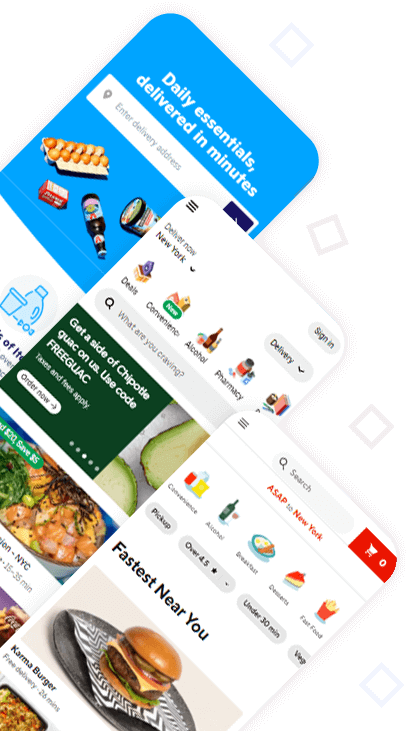
FoodSpark’s USA food data API delivers restaurant, menu, and delivery data from DoorDash, Uber Eats, and Grubhub. You can then get it as JSON, CSV, or a live API feed. Every record also carries the city, state, and ZIP code. So you can compare New York, Chicago, and Los Angeles fairly.

In short, you get:

  • Delivery app data: restaurants, menus, prices, fees, promos, and ratings
  • Menu details: dishes, combos, sizes, add-ons and dietary tags
  • US-ready fields: pre-tax prices, service fees, calories and ZIP codes
  • Flexible delivery: a one-off dataset, a scheduled feed or live API access

Why the USA Food Data API Needs Local Detail

The US delivery market, however, has one dominant app, city-level rules, and prices shown before tax. So, data that ignores them leads to unfair comparisons. That is why our USA food data API captures each local detail as its own field.

  • One clear leader: DoorDash held 60.7% of observed US delivery card spending at the end of 2024, says Earnest Analytics. Uber Eats followed with 26.1%, while Grubhub had 6.3%.
  • A new owner for Grubhub: Wonder completed its purchase of Grubhub, valued at $650 million, in January 2025. Meanwhile, Wonder also runs its own food halls.
  • City rules: New York City caps app delivery fees at 15% and sets a minimum pay rate for delivery workers. Since April 2026, that rate has been $22.13 an hour before tips.
  • Calorie labels: Chains with 20 or more locations must show calories on their own menus, including online menus. On delivery apps, however, FDA draft guidance treats this as voluntary.
  • Sales tax: The US has no national sales tax, and rates vary by state and city. Therefore, we record menu prices as the apps show them, usually before tax.

USA Food Data API at a Glance

FactorWhat it means for your data
Main appsDoorDash, Uber Eats and Grubhub
Spending shareDoorDash 60.7%, Uber Eats 26.1% and Grubhub 6.3% at the end of 2024
CurrencyUS dollar (USD)
TaxState and local sales tax, usually added at checkout
LabelsCalories on chain menus, and sometimes on apps
City rulesFee caps and minimum pay for delivery workers in New York City
ZIP codesFive digits, such as 10001

Sources Covered by the USA Food Data API

The USA Food Data API collects public data from the apps and chains US diners use most. Then we merge it into one clean dataset. Each linked name also opens its full API page.

Delivery Apps

Platform (owner)Data you get
DoorDash (DoorDash)Restaurants, menus, prices, fees, promos, and ratings
Uber Eats (Uber)Restaurants, menus, prices, fees, offers, and ratings
Grubhub (Wonder)Restaurants, menus, prices, fees, and perks
Restaurant websites and appsDirect-order menus and prices, on request

So why not use the apps’ own APIs? DoorDash, Uber Eats and Grubhub do offer APIs, but only to partner restaurants and their tech providers. However, those APIs show your own stores and orders. By contrast, the USA food data API shows the whole market in the ZIP codes you choose.

Restaurant Chains

Chains: we also cover national chains such as McDonald’s, Starbucks, and Domino’s. In addition, we cover casual-dining chains such as Lazy Dog and Firebirds Wood Fired Grill.

Need a source that is not listed? Then we build a custom crawler and add it to your USA food data API feed.

Data Fields in the USA Food Data API

Every USA food data API record uses the same clean field names. As a result, you can join DoorDash, Uber Eats, and Grubhub data without extra work.

Restaurant and Menu Fields

FieldExample
Restaurant name and IDPlatform ID plus our own matched ID
Address and locationCity, state, ZIP code, latitude and longitude
Cuisine and tagsBurgers, pizza, Mexican, Chinese, sushi and more
Menu itemName, description, price, size, combos and add-ons
RatingsStar rating and review count
Opening hoursHours by weekday

Fee and Offer Fields

FieldExample
Delivery feeFee for a given address
Service and small-order feesExtra platform fees, where shown
Minimum orderSmallest order value in dollars
PromosDiscounts, free delivery and member deals such as DashPass
Delivery timeQuoted time range in minutes

US-Only Extras

  • Pre-tax prices: menu prices before state and local sales tax
  • Calories: calorie counts, wherever a menu or app shows them
  • Dietary tags: vegan, gluten-free and similar labels, as listed
  • State and county: for tax, pay-rule and regional analysis

Cities and States in the USA Food Data API

The USA food data API covers every area a source app serves. Even so, the big metro areas matter most, since all three apps compete there.

Metro areaWhy it matters
New York CityThe densest market, with its own delivery worker pay rules
Los AngelesA huge, spread-out market across many ZIP codes
ChicagoGrubhub’s home city and a major Midwest market
Houston and DallasLarge markets in Texas
Smaller cities and suburbsWhere app coverage and delivery times can differ

For example, you can compare one burger chain’s prices in New York and Dallas. Likewise, you can check how delivery fees change from one ZIP code to the next.

How the USA Food Data API Maps ZIP Codes

US ZIP codes have five digits, such as 10001 in Manhattan. Then the USA Food Data API adds the city, county, state, and coordinates to each record. As a result, you can roll data up from one street to all 50 states.

Sample Record From the USA Food Data API

Below, for example, is a shortened record from the USA Food Data API. The restaurant and values are examples only.

{
  "platform": "doordash_us",
  "restaurant_id": "dd_us_2219034",
  "restaurant_name": "Sample Burger Co.",
  "city": "New York",
  "state": "NY",
  "zip_code": "10001",
  "item_name": "Double cheeseburger combo",
  "item_price_usd": 14.99,
  "price_before_tax": true,
  "calories_kcal": 1240,
  "delivery_fee_usd": 2.99,
  "service_fee_usd": 2.25,
  "promo": "$0 delivery fee with DashPass",
  "rating": 4.7,
  "review_count": 1850,
  "delivery_time_min": "25-35",
  "collected_at": "2026-10-08T19:00:00-04:00"
}

Formats and Delivery

You can get the data as JSON, CSV, Excel, or XML. In addition, we can push it to a database, cloud storage, or your own endpoint. Refresh rates, meanwhile, range from real-time and daily to weekly or monthly.

How It Works

  1. Share your needs: tell us the apps, cities, and fields you want.
  2. Review a sample: check a free USA sample first.
  3. Set up the feed: then we configure crawlers, schedules, and quality checks.
  4. Stay covered: finally, we fix the crawlers whenever an app changes.

What Teams Do With the USA Food Data API

Teams use the USA Food Data API to follow a market where fees and promos change from city to city. For example, they:

  1. Compare platforms: check the same restaurant’s price on DoorDash, Uber Eats, and Grubhub.
  2. Track fees: follow delivery, service, and small-order fees by ZIP code.
  3. Measure markups: compare app prices with in-store or website prices for the same chain.
  4. Watch city rules: see how fees move in New York City as pay rules rise each April.
  5. Benchmark chains: compare McDonald’s, Starbucks, and regional chains by state.
  6. Feed AI and dashboards: use fresh, structured data instead of reports that go stale.

Because prices, fees, and promos keep shifting, a one-off report ages fast. So a scheduled feed usually works better.

USA Food Data API: FAQs

What is a USA food data API?

A USA food data API gives your software structured data from US delivery apps and restaurants. For example, it includes menus, prices, fees, promos, and ratings. So your apps and dashboards always work with fresh data.

Can you extract DoorDash, Uber Eats, and Grubhub data?

Yes. We collect public DoorDash, Uber Eats, and Grubhub menus, prices, fees, promos, and ratings by city or ZIP code. In addition, each dish stays linked to its restaurant ID.

Are prices shown before or after tax?

US menus usually show prices before sales tax, which is added at checkout. So we record the listed price and tag the state and city for later tax analysis.

Do you capture calories?

Yes, wherever a menu or app shows them. Chains with 20 or more locations must list calories on their own menus. On delivery apps, however, FDA draft guidance treats it as voluntary, so coverage varies.

Do you cover every state?

Yes, we cover every area the apps serve, across all 50 states. However, you can also start with a few metro areas, then expand.

Is the data legally sourced?

We collect only public listing data, such as menus, prices, ratings, and availability. In other words, we never collect personal or login-protected data. We also design the feed with state privacy laws, such as California’s, in mind.

How do I get a free sample?

Just tell us the app, city, and fields you need. Then we send a free sample, usually as JSON or CSV.

Food Data API: Frequently Asked Questions

COMMON QUERIES

Before You Decide to Get Data for Your Business, Have a look at commonly asked questions and their answers

We can extract restaurant data, menu items, food prices, grocery products, reviews, ratings, offers, delivery fees, stock availability, locations, and platform-specific food data.

Yes, data can be collected from food delivery apps, grocery platforms, restaurant listing sites, quick commerce apps, and food aggregator platforms based on your business needs.

Yes, custom datasets can be prepared by country, city, platform, cuisine, product category, restaurant type, grocery category, or any required data field.

Yes, real-time and scheduled food data APIs are available for businesses that need fresh pricing, availability, menu, review, and delivery data.

Common fields include restaurant name, menu item, price, discount, rating, review count, address, latitude, longitude, cuisine, product name, stock status, delivery time, and source URL.

Data can be delivered in CSV, Excel, JSON, XML, API, database-ready format, cloud storage, or any custom format required by your team.

Yes, businesses can use this data to monitor competitor prices, track discounts, compare menus, analyze product availability, and identify market trends across platforms.

Data is cleaned, structured, validated, and checked for duplicate or missing values. Refresh frequency can be set as real-time, daily, weekly, monthly, or custom.

Yes, structured food data can be used for AI model training, business intelligence dashboards, pricing analysis, demand forecasting, market research, and competitor intelligence.

Yes, sample data can be provided so you can review the structure, fields, format, and quality before starting a custom data project.

Yes. We only collect publicly available listing data — menus, prices, ratings, availability — and never personal or login-protected information. We also support takedown and correction requests.

Unlike an in-house scraper, we handle all the maintenance — site changes, anti-bot blocks, format updates — so you always get clean, ready-to-use data without the upkeep.

Foodspark FAQs