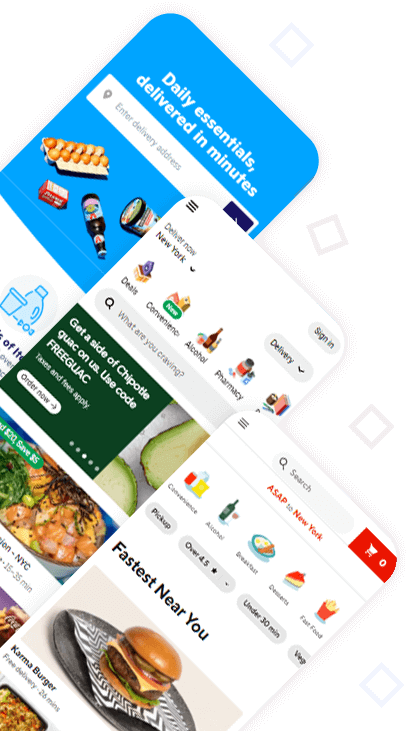
Canada Food Data API: Restaurant, Menu & Grocery Price Data

SkipTheDishes API

SkipTheDishes API provides structured restaurant, menu, and delivery data to power apps, analytics, and food delivery insights.

Tim Hortons API

Tim Hortons API extracts restaurant, menu, and delivery data for analytics and market insights.

GoBio API

GoBio API extracts restaurant, menu, and delivery data for analytics and market insights.

White Spot API

White Spot API extracts restaurant, menu, and pricing data for analytics, trend tracking, and market insights.

FoodSpark’s Canada food data API delivers structured restaurant, menu, and grocery price data from Uber Eats, DoorDash, SkipTheDishes, Tim Hortons, Loblaws, Walmart Canada, Costco, and other Canadian sources, as JSON, CSV, or a live API. Every record is tagged with province, city, and postal code, and keeps the English or French text exactly as listed, so you can compare Toronto, Montreal, and Vancouver on the same terms.

What you get:

  • Restaurant and menu data: restaurants, cuisines, dishes, prices, delivery and service fees, ratings and opening hours
  • Grocery data: regular, sale and member prices (PC Optimum, Scene+), unit prices, UPC codes and availability by store
  • Canada-ready fields: province, postal code, language, pre-tax price with the province’s sales tax, and origin labels such as Product of Canada
  • Your delivery choice: a one-off dataset, a daily or weekly feed, or an API endpoint

2. Why Canadian food data needs its own approach

Canada looks like one market, but prices, taxes, and even the language of a menu change from one province to the next. Data that ignores this gives you comparisons that do not hold up.

  • Three delivery apps in a close race. Uber Eats led with more than 5.3 million monthly active users in March 2025, followed by DoorDash (3.1M+) and SkipTheDishes (2.9M+), according to Sensor Tower. Winnipeg-based SkipTheDishes belongs to Just Eat Takeaway.com, which Prosus agreed to buy in 2025. The same restaurant is often listed on all three apps, with different prices, fees and promotions on each.
  • Five grocers, dozens of banners. Loblaw (17%), Costco (15%), Sobeys (14%), Walmart (13%) and Metro (6%) hold nearly two-thirds of grocery sales, based on USDA figures. Each runs many banners, such as No Frills, Real Canadian Superstore, Maxi, FreshCo, IGA, Safeway, Food Basics and Super C, and prices can differ by store and postal code.
  • Prices are shown before tax. Canadian shelf and menu prices usually exclude sales tax, which is added at checkout and depends on the province. GST is 5% everywhere; HST is 13% in Ontario, 14% in Nova Scotia (since April 1, 2025) and 15% in New Brunswick, Newfoundland and Labrador, and PEI; Quebec adds QST, and BC, Saskatchewan and Manitoba add PST. Basic groceries are zero-rated, while restaurant meals and many snacks are taxed. We keep the listed price and the province, so you can apply the right tax.
  • English and French. In Quebec, the Charter of the French Language requires French on product labels, websites and commercial documents, so Montreal and Quebec City listings often appear in French or in both languages. We keep the original text and add a language tag.
  • Loyalty and origin labels change what people pay and buy. Member prices through PC Optimum and Scene+ can differ from the shelf price. Origin labels matter more since the tariff dispute with the US: Loblaw brought back its “T” symbol for US products hit by counter-tariffs on September 8, 2026, alongside its maple-leaf Canadian product markers.
  • Supplier rules, not price rules. Canada’s Grocery Code of Conduct took effect on January 1, 2026, with Loblaw, Empire (Sobeys), Metro, Walmart Canada and Costco Canada signed up. It governs how grocers treat suppliers and does not regulate shelf prices, so price monitoring remains the only way to see who charges what.

Canada at a glance

FactorWhat it means for your data
LanguagesEnglish nationally; French in Quebec; bilingual listings in Montreal and Ottawa–Gatineau
Postal codesSix characters (A1A 1A1); the first letter maps to the province
Sales taxAdded at checkout; 5% to 15% depending on province and item
Delivery appsUber Eats, DoorDash, SkipTheDishes
GrocersLoblaw, Costco, Sobeys, Walmart, Metro and their banners

3. Platforms and sources covered

We collect publicly available data from the delivery apps, restaurant chains, and grocers Canadians use every day, then merge it into one clean dataset.

Food delivery apps

PlatformData you getRelated API
Uber EatsRestaurants, grocery and convenience stores, menus, prices, fees, promotions, delivery timesUber Eats API
DoorDashRestaurants, grocery and convenience partners, menus, prices, fees, offersDoorDash API
SkipTheDishesRestaurants, menus, prices, delivery fees, offers, ratingsSkipTheDishes API
InstacartGrocery listings by retailer and store, prices, availabilityInstacart API
FantuanAsian restaurants and menus in major Canadian citiesCustom

Restaurant chains

Menus, prices and store locations for Canadian and global chains, including Tim Hortons, White Spot, GoBio, McDonald’s, Starbucks, Subway, Domino’s, A&W Canada, Pizza Pizza, Boston Pizza, Harvey’s, Swiss Chalet, St-Hubert and Mary Brown’s.

Grocery retailers

Retailer groupBannersData you get
LoblawLoblaws, No Frills, Real Canadian Superstore, Zehrs, Fortinos, Maxi, Provigo, PC ExpressRegular and sale prices, PC Optimum offers, unit prices, store-level prices
Sobeys (Empire)Sobeys, Safeway, FreshCo, IGA, Foodland, Thrifty Foods, Voilà onlinePrices, Scene+ offers, weekly deals
MetroMetro, Food Basics, Super CPrices, weekly flyer deals
Walmart CanadaWalmart Supercentres and walmart.caPrices, rollbacks, availability by store (Walmart API)
Costco CanadaWarehouses and costco.caPrices, member deals, availability (Costco API)
Regional grocersSave-On-Foods, Co-op, Longo’sPrices and ranges

Restaurant discovery and reviews: Google Maps, Yelp, OpenTable and Tripadvisor for names, addresses, categories, ratings, review counts, hours and price levels.

Why not use the platforms’ own APIs?

Uber Eats, DoorDash and SkipTheDishes offer partner APIs so their own restaurant partners can manage orders and menus. Instacart’s developer platform builds shopping lists and recipe pages. None of them gives you market-wide prices, fees, or competitor menus across a city. That is the gap a food data API fills.

Need a Canadian source that is not listed? We build custom crawlers for it.

4. Data fields, including Canada-specific ones

Restaurant and menu fields

FieldWhat it holds
restaurant_name, restaurant_id, platformWho and where the listing comes from
address, city, province, postal_codeFull location, down to the six-character postal code
languageListing language: en or fr
cuisines, dietary_tagsFor example: Canadian, poutine, Indian; vegan, halal, gluten-free
rating, review_countPlatform rating and number of reviews
opening_hours, delivery_timeHours and estimated delivery time
delivery_fee, service_fee, small_order_fee, min_orderThe full cost to the customer beyond the menu price
item_name, item_description, categoryEach dish as listed, in English or French
item_price, currencyPrice in CAD, before sales tax, as shown to the customer
options/modifiersSizes, combos, extras and their prices
promotion, membership_offerDiscounts, free delivery, and offers for Uber One, DashPass or Skip+ members
scraped_atDate and time of collection

Grocery fields

FieldWhat it holds
retailer, banner, store_idLoblaw, Sobeys, Metro, Walmart or Costco, down to the banner and store
product_name, brand, private_labelName in English or French, brand, and whether it is a store brand (President’s Choice, No Name, Compliments, Selection, Great Value, Kirkland Signature)
upcBarcode for matching the same product across retailers
category, sizeCategory path and size (g, kg, ml, L, each)
regular_price, sale_price, multi_buyShelf price, sale price and deals such as “2 for $5”
member_price, points_offerPC Optimum and Scene+ prices or bonus points
unit_pricePrice per 100 g, per kg, per L or each
flyer_valid_from, flyer_valid_toWeekly flyer dates for the deal
origin_label, tariff_flagProduct of Canada, Made in Canada, maple-leaf or “T” tariff markers, where shown
availabilityIn stock, out of stock, online only

Canada-specific extras no generic scraper gives you

  • Province and forward sortation area (FSA) from the postal code, for province and neighbourhood comparisons
  • Pre-tax price plus the province’s sales tax rate, so you can compare delivered totals across provinces
  • Language tag and original text, so you can match the English and French names of the same product or dish
  • Member and multi-buy prices normalised into one effective price per unit
  • Origin and tariff labels, to track Canadian-made products and US-sourced items affected by counter-tariffs

Province and city coverage

We collect data nationwide, by province, by city, or from a list of postal codes you choose. These are the cities clients ask for most:

CityProvinceMain listing languagePostal codes start with
TorontoOntarioEnglishM
MontrealQuebecFrench and EnglishH
VancouverBritish ColumbiaEnglishV
CalgaryAlbertaEnglishT
EdmontonAlbertaEnglishT
OttawaOntarioEnglish and FrenchK
WinnipegManitobaEnglishR
Quebec CityQuebecFrenchG
MississaugaOntarioEnglishL
HamiltonOntarioEnglishL
GatineauQuebecFrenchJ
HalifaxNova ScotiaEnglishB
SaskatoonSaskatchewanEnglishS
VictoriaBritish ColumbiaEnglishV
St. John’sNewfoundland and LabradorEnglishA

Sales tax by province

Prices are collected as listed (before tax). We add the province’s rate so you can calculate what the customer pays. Which foods are taxable also differs by province; basic groceries are zero-rated everywhere.

Province or territorySales tax on taxable items
Ontario13% HST
Nova Scotia14% HST (since April 1, 2025)
New Brunswick, Newfoundland and Labrador, PEI15% HST
Quebec5% GST + 9.975% QST
British Columbia5% GST + 7% PST
Manitoba5% GST + 7% RST
Saskatchewan5% GST + 6% PST
Alberta and the territories5% GST

How we map postal codes to provinces

Canadian postal codes have six characters (for example, A1A 1A1). The first three form the forward sortation area (FSA), and the first letter tells you the province or region.

First letterProvince or region
ANewfoundland and Labrador
BNova Scotia
CPrince Edward Island
ENew Brunswick
G, H, JQuebec (H = Montreal area)
K, L, M, N, POntario (M = Toronto)
RManitoba
SSaskatchewan
TAlberta
VBritish Columbia
XNorthwest Territories and Nunavut
YYukon

Sample records, formats, and how it works

An illustrative delivery-app record (field values are examples, not live data):

{
  "platform": "skipthedishes",
  "restaurant_name": "Example Poutinerie",
  "address": "123 Example Street",
  "city": "Toronto",
  "province": "ON",
  "postal_code": "M5V 0X0",
  "fsa": "M5V",
  "language": "en",
  "cuisines": ["Canadian", "Poutine"],
  "rating": 4.5,
  "review_count": 1240,
  "delivery_fee": 2.99,
  "service_fee": 2.10,
  "item_name": "Classic Poutine (Large)",
  "item_price": 12.49,
  "currency": "CAD",
  "price_includes_tax": false,
  "sales_tax_rate": 0.13,
  "scraped_at": "2026-09-29T12:00:00-04:00"
}
{

{ "retailer": "example-grocer", "store_id": "1234", "province": "QC", "postal_code": "H2X 0X0", "language": "fr", "product_name": "Lait 2 % 4 L", "brand": "store brand", "upc": "0XXXXXXXXXXX", "size": "4 L", "regular_price": 6.99, "sale_price": 6.49, "points_offer": "500 points", "unit_price": "1.62 / L", "origin_label": "Product of Canada", "tariff_flag": false, "flyer_valid_to": "2026-10-01", "availability": "in_stock" }

Formats and Delivery

OptionChoices
File formatsJSON, CSV, Excel
DeliveryREST API, Amazon S3, Google Drive, SFTP or email
FrequencyOne-time, daily, weekly, or matched to weekly flyer cycles
Time zonesTimestamps in each store’s local time, across Canada’s six time zones

How It Works

  1. Tell us what you need: platforms, provinces, cities or postal codes, and fields.
  2. Check a free sample: 100 rows from your chosen sources, so you can test the data before you pay.
  3. We build and clean: crawlers, de-duplication, language tagging, and postal-code-to-province mapping.
  4. Receive your data: on your schedule or through the API. We monitor site changes and fix breaks so your feed keeps running.

What Teams Do With Canada Food Data


  • Restaurant chains and franchises: price benchmarking. Compare your menu prices with nearby competitors, province by province. “Is our combo priced above rivals in Toronto but below them in Calgary?”
  • Delivery app comparison. Measure how the same order costs on Uber Eats, DoorDash, and SkipTheDishes, including delivery fees, service fees, and member offers. “Which app is cheapest for a family order in Vancouver, after fees and tax?”
  • Grocery price monitoring. Track the same UPC across Loblaw, Sobeys, Metro, Walmart and Costco banners, and follow weekly flyer deals. “How often does No Frills undercut FreshCo and Food Basics on staples?”
  • CPG brands: shelf and promotion checks. See where your products are listed, which deals and loyalty offers run at each banner, and how you compare with store brands. “Is our PC Optimum bonus offer live at every Loblaw banner this week?”
  • Buy-Canadian and tariff tracking. Measure the share of Product of Canada items by category and follow prices on items flagged as tariff-affected. “Did tariff-flagged US products rise faster than their Canadian alternatives?”
  • Market entry and site selection. Map restaurant density by cuisine and postal area to find gaps. “Which Calgary postal areas have few Korean restaurants on delivery apps?”
  • Investors and analysts. Follow restaurant counts, fees, and promotions per delivery app, and build grocery price indexes by banner and province.
  • Food tech and apps. Build price-comparison, flyer or meal-planning products on clean, bilingual product and menu data.

8. FAQ 

What is a Canada food data API?

It is a feed of structured data about Canadian restaurants, menus, delivery apps, and grocery stores. FoodSpark collects it from sources such as Uber Eats, DoorDash, SkipTheDishes, Loblaws, Walmart Canada, and Costco, cleans it, and delivers it as JSON, CSV, Excel, or a live API.

Does SkipTheDishes have a public API for menu and price data?

No public data API. SkipTheDishes offers integrations for its own restaurant partners to receive orders and manage their menus. It does not return other restaurants’ menus, prices or fees. For market-wide data, a provider like FoodSpark collects the publicly visible listings.

Which Canadian food delivery apps can you extract data from?

Uber Eats, DoorDash and SkipTheDishes, the three largest meal-delivery apps in Canada, plus Instacart for grocery and Fantuan for Asian restaurants. We also collect restaurant data from Google Maps, Yelp, OpenTable, and Tripadvisor.

Can I get grocery prices from Loblaws, No Frills, Sobeys, Metro, Walmart and Costco?

Yes. We collect regular, sale, and member prices, unit prices, UPC codes, and availability across the Loblaws, Sobeys, Metro, Walmart Canada, and Costco banners, down to store level where prices differ by postal code.

Can you capture PC Optimum and Scene+ prices?

Yes, where the retailer shows them publicly. We record member prices and points offers in separate fields, next to the regular and sale price, so you can see what a member actually pays.

Do Canadian prices in your data include sales tax?

No. Canadian menus and shelves usually show prices before tax, and we collect them as listed. Each record carries the province and its sales tax rate (5% to 15%), so you can calculate the checkout total.

Do you deliver French-language data from Quebec?

Yes. We keep the original text as shown, in French or English, and add a language tag. Where a platform shows both languages, we capture both.

Can I get a list of all restaurants in Toronto, Montreal or Vancouver?

Yes. We can build a restaurant database for any Canadian city, province, or postal code list, with name, address, cuisine, rating, hours, and the delivery apps each restaurant uses.

Is it legal to scrape food data in Canada?

We collect publicly available business data such as listings, menus, prices, and product details. We do not collect personal information like reviewer names, in line with Canada’s privacy law (PIPEDA). Each website’s terms and your intended use also matter, so check your use case with your legal team.

How do I get a free sample?

Click “Get a Free Canada Sample”, tell us the platform, city, and fields you need, and we’ll send you 100 rows to test before you commit.

Food Data API: Frequently Asked Questions

COMMON QUERIES

Before You Decide to Get Data for Your Business, Have a look at commonly asked questions and their answers

We can extract restaurant data, menu items, food prices, grocery products, reviews, ratings, offers, delivery fees, stock availability, locations, and platform-specific food data.

Yes, data can be collected from food delivery apps, grocery platforms, restaurant listing sites, quick commerce apps, and food aggregator platforms based on your business needs.

Yes, custom datasets can be prepared by country, city, platform, cuisine, product category, restaurant type, grocery category, or any required data field.

Yes, real-time and scheduled food data APIs are available for businesses that need fresh pricing, availability, menu, review, and delivery data.

Common fields include restaurant name, menu item, price, discount, rating, review count, address, latitude, longitude, cuisine, product name, stock status, delivery time, and source URL.

Data can be delivered in CSV, Excel, JSON, XML, API, database-ready format, cloud storage, or any custom format required by your team.

Yes, businesses can use this data to monitor competitor prices, track discounts, compare menus, analyze product availability, and identify market trends across platforms.

Data is cleaned, structured, validated, and checked for duplicate or missing values. Refresh frequency can be set as real-time, daily, weekly, monthly, or custom.

Yes, structured food data can be used for AI model training, business intelligence dashboards, pricing analysis, demand forecasting, market research, and competitor intelligence.

Yes, sample data can be provided so you can review the structure, fields, format, and quality before starting a custom data project.

Yes. We only collect publicly available listing data — menus, prices, ratings, availability — and never personal or login-protected information. We also support takedown and correction requests.

Unlike an in-house scraper, we handle all the maintenance — site changes, anti-bot blocks, format updates — so you always get clean, ready-to-use data without the upkeep.

Foodspark FAQs